Raised red yellow and white spots erythema toxicum can appear on babies when theyre born. Then spreads to the face.

What Is Fifth Disease Cleveland Clinic
Often this condition isnt diagnosed until after the fever disappears and the rash appears.
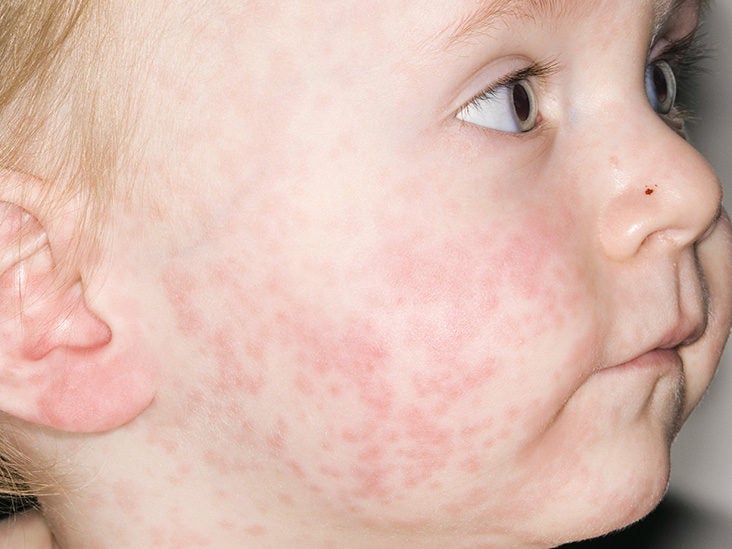
Rash on toddler face no fever. Kids between 9 months and 9 years often get this bumpy rash. It should get better in a few weeks without treatment. Prevention of scarlet fever is important because of its contagious nature.
They usually appear on the face body upper arms and thighs. Fever and skin rashes contagious diseases Many children develop fever and a rash pimples or red patches or both at the same time. The infection is probably most contagious during the fever phase of the illness before the rash breaks out.
Pink or skin-coloured spots. An itchy rash on the face can be caused by a number of conditions. No fever no flu-like symptons no lymph node.
Gradually over time the rash may lighten and skin starts to peel on the affected areas. It may start around the neck and gradually spreads downwards towards the chest and arms. Within 24 hours of the fever ending the child is no longer contagious and can return to school.
This could be a sign of infection. Heat rash rarely produces other symptoms. Itchy skin rash all over body except for face neck palms and soles for 14 days.
Bacteria are carried by air droplet hence coughing and sneezing around a Scarlet fever. The rash can disappear and reappear. The rash lasts 1 to 3 days.
Viral infections like hepatitis B Epstein-Barr or. The rash is harmless. Can it be hiv ars Answered by Dr.
They go away by themselves and have no long-term effects. By the time the rash appears the child feels fine. There are numerous potential causes of a viral rash in a toddler with no fever.
Besides rash fever swollen glands pus dots vomiting and appetite loss are common symptoms. Illnesses that may cause redness of the face are chicken pox roseola and fifth disease. The rash starts 12 to 24 hours after the fever goes away.
The most common infections are roseola and hand foot and mouth disease. Red- or pinkish-dotted rash that starts on the face and spreads to the body which can then merge together to create a larger rash. Most of these infections are caused by viruses and last a few days.
It sounds more likely that it is an allergic reaction to somethi. When sweat ducts become obstructed your child may develop a prickly heat rash which can appear on the neck and face suddenly as clear or red itchy bumps. 2 or 3 days of high fever without a rash or other symptoms.
It breaks out on the arms legs and bottom sometimes with blisters. Roseola is an illness most common for those between six months and three years and is usually identifiable if your toddler has a high fever for several days but when the fever disappears a rash follows. You can also have rubella without showing any.
A type of human herpes virus. Examples include rubella roseola and fifth disease. Pink small flat spots on the chest and stomach.
Roseola which means sudden rash crops up most commonly between six and 24 months of age.